Training systems often promise precision. Numbers appear orderly, sensors feel authoritative, and dashboards suggest control. Yet performance adaptation unfolds inside biological systems shaped by fatigue, stress, expectation, and recovery capacity. Within that reality, the Rate of Perceived Exertion (RPE) occupies an unusual role. It is self-reported, subjective, and dependent on awareness. At the same time, decades of peer-reviewed research show that RPE tracks physiological strain with notable consistency across populations and modalities. The accuracy of RPE training rests not on perfection, but on repeatable alignment with internal load.
Accuracy, in this context, does not mean error-free prediction of heart rate or oxygen consumption. It refers to whether RPE can reliably represent how demanding a training stimulus is for a given athlete at a given time. That standard is narrower, more practical, and more defensible.

Origins of Accuracy Claims
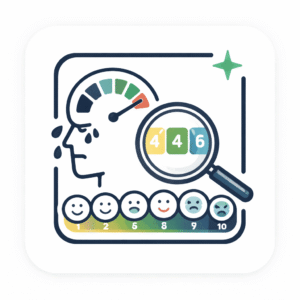
The scientific basis for RPE accuracy begins with the work of Swedish psychologist Gunnar Borg. His early experiments examined how individuals translated exertion into numerical judgment. Borg deliberately structured his 6–20 scale to align with heart rate responses in healthy adults performing incremental exercise.
Borg defined perceived exertion as:
“the feeling of how hard, heavy, and strenuous a physical task is.”
— Gunnar Borg, Psychophysical Bases of Perceived Exertion, 1982
https://pubmed.ncbi.nlm.nih.gov/7154893/
This definition framed RPE as an integrated signal rather than a single physiological marker. Borg’s subsequent validation studies reported strong associations between RPE and oxygen uptake, ventilation, and blood lactate concentration. These findings established RPE as a psychophysiological measure rather than a motivational guess.
Correlation With Objective Physiological Markers
Accuracy claims for RPE rest largely on correlation data. Across controlled laboratory conditions, RPE demonstrates consistent relationships with several objective variables:
- Heart rate: Correlation coefficients commonly range from r = 0.80 to 0.90 during steady-state aerobic exercise.
- Oxygen consumption (VO₂): Linear associations appear across graded workloads until near-maximal effort.
- Blood lactate: RPE rises predictably across lactate thresholds, often preceding sharp inflection points.
A review published in Sports Medicine reported that perceived exertion provides “a valid estimate of exercise intensity across a wide range of populations and exercise modes.”
https://link.springer.com/article/10.2165/00007256-200636060-00004
These findings do not suggest perfect alignment at every moment. They show repeatability across sessions and individuals, which is the operational definition of accuracy in applied training.
Session RPE and Internal Load Estimation
Accuracy improves when RPE is used at the session level rather than minute-by-minute comparison. Session RPE multiplies the athlete’s perceived intensity by session duration, producing a composite internal load score.
Carl Foster, one of the most cited researchers in this area, described the method as follows:
“The session RPE method provides a simple and inexpensive means of monitoring training load.”
— Foster et al., Journal of Strength and Conditioning Research, 2001
https://journals.lww.com/nsca-jscr/Abstract/2001/11000/A_New_Approach_to_Monitoring_Exercise_Training.6.aspx
Validation studies comparing session RPE with heart-rate–based training impulse models show strong agreement across endurance and team sports. In intermittent activities, session RPE often demonstrates superior sensitivity to accumulated fatigue.
Accuracy Across Training Modalities
Endurance Training
In endurance contexts, RPE accuracy benefits from repeated exposure to sustained effort. Trained runners and cyclists display low variability in RPE ratings at known intensities. Field studies show that elite endurance athletes frequently pace competition efforts using perceived exertion rather than real-time physiological feedback.
A study in Medicine & Science in Sports & Exercise observed that trained cyclists maintained power output more consistently during time trials when pacing by RPE compared with heart rate.
https://journals.lww.com/acsm-msse/Fulltext/2009/03000/Pacing_Strategy_and_Perceived_Exertion.9.aspx
Strength Training
Accuracy in resistance training requires a different framing. Heart rate responds poorly to short, high-force efforts. RPE, paired with repetitions-in-reserve concepts, estimates proximity to failure with practical reliability.
Research in the Journal of Strength and Conditioning Research found that trained lifters accurately predicted remaining repetitions within one repetition in the majority of trials once familiar with the scale.
https://journals.lww.com/nsca-jscr/Fulltext/2017/01000/Accuracy_of_Repetitions_in_Reserve.7.aspx
Team Sports and Intermittent Exercise
Team sports present complex loading patterns. Acceleration, deceleration, contact, and tactical stress interact in ways heart rate alone fails to capture. Session RPE correlates strongly with markers of neuromuscular fatigue and injury risk in these settings.
A review in British Journal of Sports Medicine concluded that session RPE shows “good to very good validity” for internal load monitoring in intermittent sports.
https://bjsm.bmj.com/content/51/13/1033
Sources of Error and Variability
RPE accuracy is not automatic. Several factors influence reliability:
- Experience level: Novices tend to overestimate exertion early in exposure.
- Anchoring quality: Without reference efforts, scale compression occurs.
- Psychological state: Anxiety, competitiveness, or external pressure alter perception.
- Social context: Group settings influence reporting honesty.
Studies show that RPE reliability improves significantly after two to three weeks of guided use, especially when athletes receive feedback linking sensation to objective outcomes.
RPE Calculators and Quantification Tools
Digital tools attempt to formalize RPE data. An rpe calculator translates subjective ratings into estimated intensity zones or cumulative fatigue scores. A rate of perceived exertion calculator often multiplies session RPE by duration to produce internal load units.
These tools do not increase intrinsic accuracy. Their value lies in consistency and trend tracking. When RPE rises for stable workloads, calculators flag accumulating strain. When RPE drops at similar outputs, adaptation may be underway.
Research does not support the idea that calculators outperform direct interpretation. They function as organizational aids rather than validation mechanisms.
Comparison With Heart Rate Accuracy
Heart rate accuracy depends on stable conditions. Hydration, temperature, altitude, sleep, illness, and medication influence cardiac response. RPE integrates these factors implicitly.
A 2011 review in Sports Medicine reported that heart rate may overestimate metabolic intensity by 5–15% during prolonged exercise in the heat, even at constant workload.
https://link.springer.com/article/10.2165/11593190-000000000-00000
RPE often tracks perceived strain more closely during these conditions. That alignment supports its use as a corrective lens rather than a replacement metric.
Ethical and Practical Dimensions
Accuracy extends beyond numbers. Trust influences reporting fidelity. When athletes perceive punitive responses to high RPE ratings, underreporting follows. Transparent communication and consistent response protocols preserve data quality.
RPE shifts some authority from devices to individuals. That shift demands education rather than blind acceptance. Balanced systems treat RPE as evidence to interpret, not as a verdict to obey.
Actionable Practices to Improve Accuracy
- Conduct anchoring sessions at known intensities.
- Pair RPE ratings with objective outputs during education phases.
- Review discrepancies openly rather than correcting ratings.
- Track trends rather than isolated values.
- Use rpe calculator outputs as summaries, not diagnostics.
Accuracy grows from repetition, reflection, and calibration.
Final Considerations
The accuracy of RPE training rests on alignment rather than perfection. It reflects internal load with consistency when properly taught and interpreted. Research spanning decades supports its validity across endurance, strength, and intermittent sports.
RPE does not replace physiological measurement. It contextualizes it. In training environments shaped by human variability, that contextual signal remains difficult to replicate through sensors alone.