Why a Subjective Scale Earned Scientific Credibility
Training science has historically favored instruments that promise objectivity. Heart rate monitors quantify beats per minute. Power meters register watts. Metabolic carts measure oxygen consumption. Against this backdrop, the idea that a person’s subjective sense of effort could guide training appeared, at first, counterintuitive. Yet the Rating of Perceived Exertion, commonly abbreviated as RPE, has persisted for more than half a century, supported by experimental evidence and widespread adoption.
The RPE scale did not survive through tradition alone. It earned legitimacy through repeated validation, practical utility, and its ability to capture aspects of effort that instruments often miss. Explaining the RPE scale requires examining its origins, structure, interpretation, and the reasons it remains relevant alongside modern technology.
Historical Origins of the RPE Scale
The RPE scale originates from the work of Gunnar Borg, a Swedish psychologist and physiologist whose research during the 1950s and 1960s focused on human perception during physical work. Borg questioned the assumption that effort could be fully understood through physiological markers alone.
In his foundational publications, Borg defined perceived exertion as “the feeling of how heavy, strenuous and laborious exercise is.” This phrasing, cited repeatedly in exercise science literature, framed exertion as a measurable sensation rather than an abstract impression.
https://journals.lww.com
Borg’s approach rested on empirical testing. Participants reported perceived exertion during controlled exercise while researchers measured heart rate, oxygen uptake, and blood lactate. The consistency of these relationships laid the groundwork for a standardized scale.
Structure of the Original Borg Scale
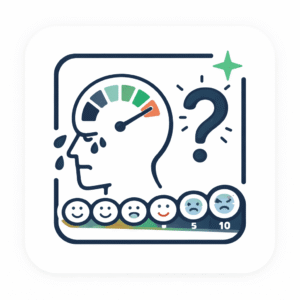
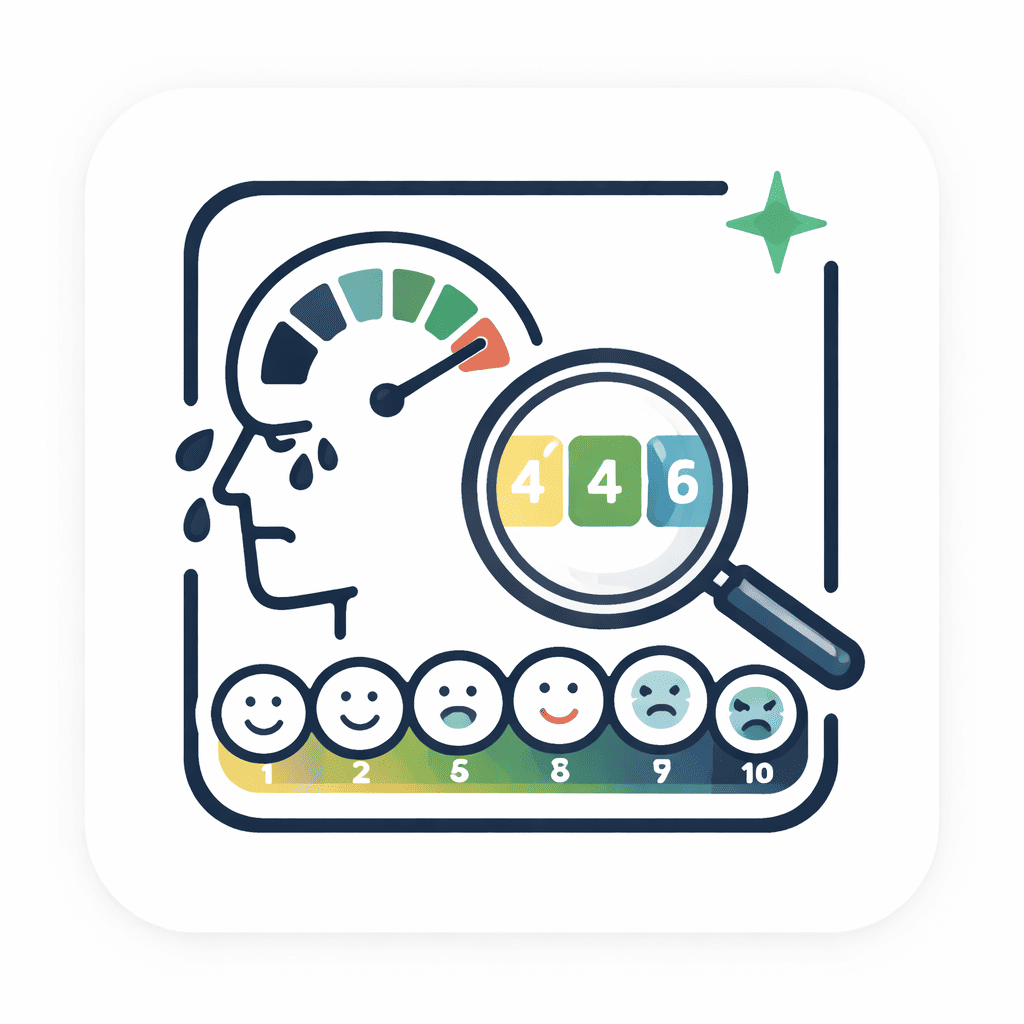
The most widely recognized RPE scale ranges from 6 to 20. The numerical choice was deliberate rather than arbitrary. Borg designed the scale so that multiplying the reported RPE by 10 would approximate heart rate in beats per minute for healthy adults performing steady-state aerobic exercise.
The scale includes verbal anchors to support interpretation:
- 6: no exertion at all
- 7–8: extremely light
- 9–10: very light
- 11–12: light
- 13–14: somewhat hard
- 15–16: hard
- 17–18: very hard
- 19–20: extremely hard to maximal
Borg emphasized that the scale should be used holistically, integrating bodily signals rather than isolating one sensation. He noted that “perceived exertion is strongly related to heart rate, oxygen uptake, and blood lactate.”
https://journals.lww.com
What the RPE Scale Measures
The RPE scale measures internal load. It reflects how demanding an activity feels to the individual at that moment. This perception arises from the integration of multiple physiological and psychological signals, including:
- Breathing difficulty
- Muscular fatigue
- Cardiovascular strain
- Thermal stress
- Cognitive and emotional load
This integrative quality distinguishes RPE from single-variable metrics. A review published in Sports Medicine reported that perceived exertion reflects combined central and peripheral fatigue rather than isolated system stress.
https://link.springer.com
In practice, this means RPE often captures overall difficulty more accurately than pace, power, or heart rate alone.
Variants of the RPE Scale
While the 6–20 Borg scale remains foundational, several adaptations emerged to improve usability across contexts. The Borg CR10 scale compresses exertion ratings into a 0–10 range with descriptive anchors such as “moderate,” “strong,” and “very strong.”
The CR10 scale gained traction in:
- Resistance training
- High-intensity interval training
- Rehabilitation and clinical exercise
- Team sports
Despite numerical differences, the conceptual basis remains unchanged. Both scales rely on anchored subjective assessment rather than external measurement.
Modern training platforms often integrate RPE input into an rpe calculator or a rate of perceived exertion calculator, translating reported values into training intensity estimates or session load metrics.
Scientific Evidence Supporting RPE
The credibility of the RPE scale rests on extensive validation. Numerous studies demonstrate strong correlations between RPE and physiological markers under controlled conditions.
A meta-analysis published in Journal of Strength and Conditioning Research reported correlation coefficients between RPE and heart rate ranging from 0.80 to 0.90 during steady-state endurance exercise.
https://journals.lww.com
Comparable relationships appear with oxygen uptake and blood lactate concentration, particularly when participants receive instruction on scale use. These findings support the reliability of perceived exertion when applied consistently.
Familiarization and Reliability
RPE reliability improves with experience. Individuals unfamiliar with the scale often misjudge effort during initial sessions. Research shows that structured familiarization periods reduce variability in reported exertion.
A longitudinal study in International Journal of Sports Physiology and Performance observed improved consistency in RPE reporting after several weeks of repeated use within structured training programs.
https://journals.humankinetics.com
This learning effect underscores the importance of education rather than innate perception accuracy.
RPE Compared With Heart Rate
The comparison between RPE and heart rate illustrates complementary strengths rather than mutual exclusion. Heart rate offers objective measurement but responds slowly to rapid intensity changes and drifts under heat, dehydration, or cumulative fatigue.
RPE responds immediately. Research published in European Journal of Applied Physiology found that perceived exertion adjusted more rapidly than heart rate during interval transitions and environmental stress.
https://link.springer.com
This responsiveness explains why RPE remains useful during variable conditions where heart rate loses precision.
Interpretation of RPE Values in Training
The RPE scale gains practical meaning through interpretation. In endurance contexts, commonly accepted ranges include:
- RPE 2–3: easy aerobic activity
- RPE 4–5: steady endurance
- RPE 6–7: threshold intensity
- RPE 8–9: high-intensity efforts
- RPE 10: maximal exertion
These ranges provide flexibility. Athletes adjust pace or workload to match internal state while preserving the intended training stimulus.
In strength training, RPE often reflects proximity to failure. An RPE of 8 typically indicates that two repetitions remain in reserve. Research in Sports Medicine found that RPE-based load prescription produced strength gains comparable to percentage-based methods while allowing autoregulation.
https://link.springer.com
Psychological Dimensions of the RPE Scale
One of the RPE scale’s distinguishing features lies in its sensitivity to psychological stress. Sleep deprivation, emotional strain, and cognitive fatigue elevate perceived exertion even when mechanical output remains unchanged.
This sensitivity allows RPE to function as an early warning indicator. Coaches often observe rising RPE at constant workloads preceding performance decline, illness, or overreaching.
Borg emphasized this holistic nature, stating that perceived exertion reflects “the total amount of stress experienced by the individual.”
https://journals.lww.com
RPE Scale in Clinical and Rehabilitation Settings
Clinical exercise programs frequently rely on RPE when heart rate monitoring proves unreliable. Patients taking beta-blockers, for example, exhibit blunted heart rate responses to exercise.
The American College of Sports Medicine endorses RPE for exercise intensity prescription in such populations.
https://www.acsm.org
This endorsement reflects confidence in perceived exertion as a safe and effective guide when objective markers lose validity.
Digital Translation: RPE Calculators
An rpe calculator does not measure effort; it interprets reported exertion. Users input RPE values, and the calculator estimates related variables such as relative intensity, session load, or approximate percentage of maximal effort.
Many platforms compute session load by multiplying RPE by session duration, a method validated in team sports research. This approach links internal load with external volume, improving workload monitoring without excessive instrumentation.
A rate of perceived exertion calculator adds structure and consistency, not authority. Its accuracy depends entirely on the quality of user input.
Common Misunderstandings of the RPE Scale
Several misconceptions persist:
- RPE is not guesswork; it relies on anchored descriptors
- RPE does not replace objective metrics; it complements them
- RPE accuracy improves with education and repetition
Misuse often stems from lack of instruction rather than inherent weakness of the scale.
Practical Guidelines for Applying the RPE Scale
Effective use of the RPE scale follows several principles:
- Provide clear explanations of scale anchors
- Encourage honest reporting without comparison
- Combine RPE with objective data when available
- Track trends across time rather than isolated values
Consistency over weeks and months matters more than numerical precision on any single session.
Final Considerations
The RPE scale represents an evidence-based attempt to quantify subjective experience without dismissing its complexity. Explaining the RPE scale requires recognizing perception as an integrative signal that reflects physiological, mechanical, and psychological stress simultaneously.
An rpe calculator or rate of perceived exertion calculator provides structure for interpretation, yet the scale’s value rests on education, consistency, and contextual judgment. When applied thoughtfully, the RPE scale remains a reliable and adaptable framework for guiding training intensity in environments where numbers alone fail to capture the full cost of effort.