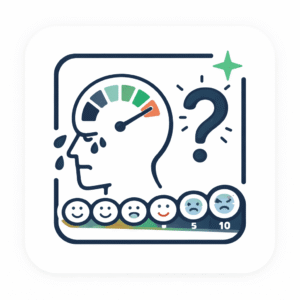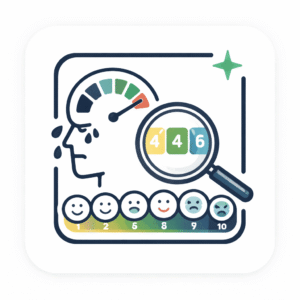
In strength rooms, endurance labs, and team sport facilities, one quiet metric continues to resist technological replacement. Heart-rate straps lose signal, GPS units misread indoor movement, and power meters remain out of reach for many athletes. Yet the subjective assessment of effort—structured, repeatable, and increasingly standardized—persists across performance levels. The Rate of Perceived Exertion, widely known as RPE, occupies an unusual position in training science: it is subjective by definition, yet it correlates strongly with objective physiological stress. That duality explains why RPE remains central in evidence-informed programming.
RPE does not promise certainty. It offers structured self-reporting that reflects internal load rather than external output. For coaches managing variability, fatigue, and adaptation, that distinction matters.

Origins and Scientific Grounding
RPE originates from the work of Swedish psychologist Gunnar Borg, whose research in the 1960s sought to quantify subjective effort in a manner that aligned with physiological responses. Borg’s original 6–20 scale was deliberately mapped to approximate heart rate multiplied by ten in healthy adults. The conceptual framing remains influential.
Borg defined perceived exertion as:
“the feeling of how hard, heavy, and strenuous a physical task is.”
— Gunnar Borg, Psychophysical Bases of Perceived Exertion, 1982
https://pubmed.ncbi.nlm.nih.gov/7154893/
Subsequent validation studies demonstrated strong correlations between RPE and oxygen consumption, blood lactate concentration, ventilation rate, and heart rate across modalities. Meta-analyses routinely report correlation coefficients between RPE and heart rate ranging from r = 0.80 to 0.90 under steady-state conditions, a range comparable to many wearable-derived estimates.
That reliability explains why organizations such as the American College of Sports Medicine continue to include RPE in official exercise testing and prescription guidelines alongside heart rate and workload metrics. (ACSM Guidelines)
RPE Scales in Practical Use
Two scales dominate applied training environments:
Borg 6–20 Scale
- Anchored to physiological markers
- Common in clinical, endurance, and rehabilitation settings
- Allows approximate heart-rate inference in populations without monitors
Modified CR10 Scale
- Runs from 0 to 10
- Favored in strength training and team sports
- Aligns well with proximity-to-failure models
In resistance training contexts, the CR10 framework often integrates “repetitions in reserve” (RIR). An RPE of 10 reflects maximal effort with no additional repetitions possible, while an RPE of 8 typically reflects two repetitions left in reserve. This translation has become standard practice in powerlifting and evidence-based hypertrophy programming.
Why Subjective Load Matters
Objective external load measures—kilograms lifted, watts produced, meters covered—describe output, not cost. Two athletes completing identical sessions may experience meaningfully different internal stress. Sleep disruption, caloric intake, illness, altitude, and psychological strain all alter perception of effort before measurable output declines.
RPE captures that internal cost. Research published in Sports Medicine shows that session RPE multiplied by training duration predicts markers of accumulated fatigue and overreaching more reliably than volume alone in mixed-modality athletes. (Sports Medicine review)
From a risk management perspective, this matters. Sudden spikes in internal load correlate with increased injury incidence, particularly in field sports. RPE offers an early signal when output remains stable but physiological tolerance erodes.
Application Across Training Domains
Strength and Hypertrophy Training
In resistance training, RPE enables autoregulation without abandoning structure. Load targets remain, yet daily readiness informs execution. A programmed set at RPE 8 adapts automatically: load rises on strong days and falls on compromised ones, while stimulus consistency remains intact.
Controlled trials comparing fixed-percentage loading to RPE-guided loading show similar hypertrophy outcomes with reduced joint stress and improved adherence in trained populations. One study in the Journal of Strength and Conditioning Research reported equivalent strength gains over eight weeks, with lower perceived joint discomfort in the RPE-guided group. (JSCR study)
Endurance Training
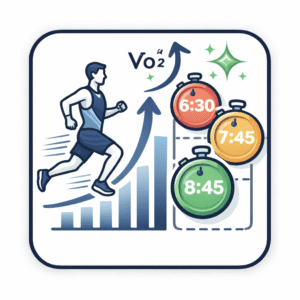
In endurance disciplines, RPE excels during variable terrain, heat exposure, and long-duration efforts where heart rate drifts independently of workload. Elite marathoners and cyclists routinely use RPE to anchor pacing during competition when external metrics lose precision.
Kenyan distance runners, studied extensively for pacing behavior, rely heavily on perceived effort rather than real-time metrics during early race stages, adjusting output only when RPE diverges from expectation.
Team Sports and Mixed Modalities
For sports combining sprinting, contact, and aerobic load, RPE captures global stress better than any single sensor. Session RPE has become standard in professional football, rugby, and basketball environments for load tracking across competitive seasons.
FIFA’s medical research publications reference session RPE as a validated method for monitoring cumulative fatigue in congested match schedules. (FIFA Medical Network)
RPE Calculators and Digital Translation
As RPE adoption expands, digital tools attempt to formalize its use. An rpe calculator translates subjective ratings into estimated intensity zones, projected load adjustments, or fatigue scores. Similarly, a rate of perceived exertion calculator often integrates session duration to estimate training load units comparable across modalities.
These tools do not replace judgment. Their value lies in trend detection rather than precision. When athletes report rising RPE for stable workloads across sessions, calculators highlight accumulating strain before performance decline becomes visible.
Importantly, RPE calculators only perform as well as the athlete’s calibration. Education and repeated anchoring sessions remain necessary for meaningful data.
Limitations and Misuse
RPE’s strength—subjectivity—introduces vulnerability. Novice trainees often misjudge effort, particularly in resistance training where discomfort and effort diverge. Early sessions frequently overestimate exertion, compressing the scale and reducing discrimination between intensities.
Psychological state influences ratings. Anxiety, competitiveness, or external pressure may inflate RPE independent of physiological strain. Group training environments require careful management to prevent social bias from contaminating reports.
Research also shows reduced accuracy in populations unfamiliar with sustained exertion. Calibration improves markedly after two to three weeks of guided use, a factor sometimes ignored in short-term interventions.
RPE should not function in isolation. Its strongest application appears when paired with at least one objective marker—load, pace, or volume—allowing divergence analysis rather than single-metric decision-making.
RPE in Long-Term Athlete Development
In youth and developmental athletes, RPE serves an educational role. It teaches bodily awareness, pacing literacy, and self-regulation skills that persist beyond structured programs. Longitudinal studies in adolescent endurance athletes associate early RPE education with improved pacing consistency and reduced burnout rates.
For aging populations, RPE accommodates day-to-day variability in recovery capacity without rigid prescriptions. Clinical exercise programs frequently rely on RPE when pharmacological influences render heart rate unreliable.
Ethical and Practical Considerations
RPE transfers agency to the athlete. That shift carries ethical implications in high-performance environments where incentives may encourage underreporting fatigue. Transparent culture, anonymized reporting, and non-punitive adjustment protocols protect data integrity.
Coaches who dismiss athlete-reported RPE erode trust and data quality simultaneously. Uncritical acceptance without context invites misuse. Balanced interpretation remains essential.
Integration With Modern Training Systems
Modern performance environments increasingly blend RPE with wearable data rather than treating them as competing frameworks. Discrepancies between heart rate, output, and RPE often reveal more than agreement alone. Elevated RPE alongside suppressed heart rate may indicate dehydration or central fatigue. Normal RPE with rising heart rate may signal cardiovascular drift.
RPE remains uniquely positioned to reflect central nervous system load, an element external sensors infer indirectly at best.
Final Considerations
RPE persists not out of nostalgia, but utility. It captures internal load at minimal cost, adapts across populations, and resists technological obsolescence. Its effectiveness depends on education, calibration, and ethical application rather than instrumentation.
When used with discipline, RPE complements objective metrics rather than competing with them. For practitioners seeking adaptable, evidence-aligned training oversight, RPE remains neither outdated nor simplistic. It remains observant, responsive, and grounded in the lived experience of effort itself.